
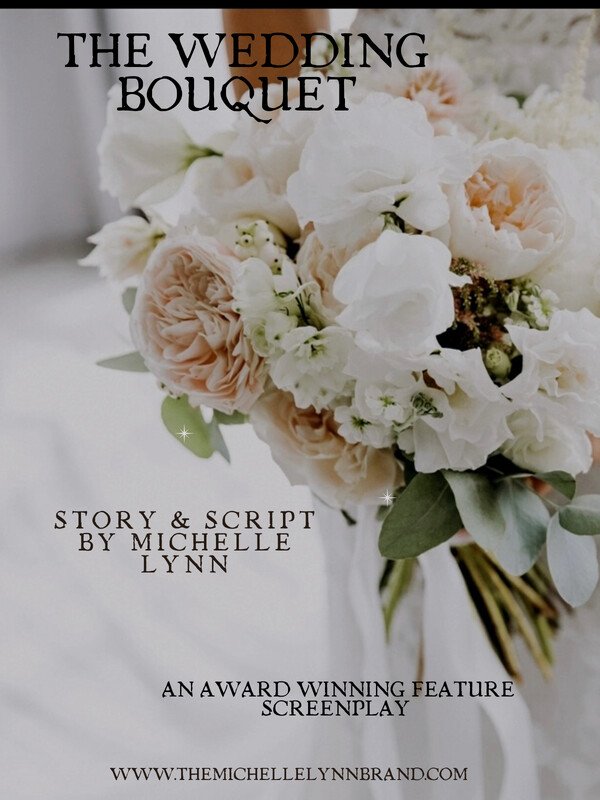
There’s a fragile kind of hope stitched into every page of The Wedding Bouquet—the kind that refuses to die even when love embarrasses you, abandons you, or deceives you in plain sight. The script opens with a wound: Sienna, dressed in white, waiting for a man who never arrives. And from that quiet humiliation, the story blooms—not into healing, but into temptation. Into illusion. Into a dangerous belief that maybe the next love will finally be the right one.
What makes this script quietly compelling is how it frames romance almost like fate playing tricks. The bouquet isn’t just a prop—it becomes a symbolic trigger, a shift in energy, a moment where Sienna’s life accelerates into something she can’t quite control. Suitors appear, attention multiplies, opportunities open—but beneath it all, there’s an unsettling question: is this luck… or a beautifully disguised downfall?
The narrative lives in excess. Big personalities, louder emotions, layered worlds—family pressure, workplace toxicity, seductive wealth, and the shadow of crime all collide into one heightened reality. At times, it feels overwhelming, but not entirely without purpose. This is Sienna’s world: chaotic, seductive, and constantly pulling her in different directions. The script doesn’t simplify her journey—it surrounds her with noise, just like real life often does when you’re searching for clarity.
Sienna herself is the emotional spine of the story. She’s not just a romantic—she’s someone who needs love to validate her existence. That vulnerability is both her strength and her blind spot. Watching her drift toward Antonio, dazzled by charm and status, while subtle warnings creep in from her father and others, creates a tension that quietly builds beneath the glamour. You sense what she cannot: that something isn’t right… and that realization will cost her.
The supporting characters feel exaggerated, almost theatrical, but they serve a purpose. Katherine’s obsession with control, her mother’s romantic delusion, Claire’s cruelty masked as sophistication—each one reflects a distorted version of what Sienna could become. Even the men orbiting her—Luke, Antonio, Jean Luc—aren’t just love interests; they represent different illusions of stability, power, and desire.Dialogue leans into boldness. It doesn’t hide. Characters say what they feel, sometimes too directly, sometimes with sharp humor or cultural flair. While it lacks subtlety in places, it carries rhythm and identity. You can hear the world—it’s loud, opinionated, alive.
Where the script slightly falters is in its restraint. It rushes through emotional transitions, stacking event upon event without always allowing them to breathe. Moments that could devastate instead pass quickly, like waves hitting shore without leaving a mark. But even then, the intent is clear—the story isn’t about stillness; it’s about motion, about being swept away before you can think.
And maybe that’s what The Wedding Bouquet truly understands.
Because sometimes, love doesn’t arrive gently. It overwhelms. It dazzles. It convinces you that everything is finally falling into place—until you realize you’ve been standing on something fragile all along.
Ratings:
Concept / Originality: 8/10
Structure: 7/10
Plot: 7.5/10
Pacing: 6.5/10
Characters: 8/10
Dialogue: 7.5/10
Average: 7.4/10
In the end, this isn’t just a story about finding love—it’s about how easily we can mistake attention for destiny, charm for truth, and a fleeting moment… for forever.